
What Is the Best Gravel for a Driveway in North Carolina?
The best gravel for a driveway in North Carolina is two stones in two layers. A packed base of ABC stone or crusher run carries the weight. Clean crushed stone such as #57 rides on top. HomeGuide agrees: “The best gravel for driveways is crushed stone paired with a base layer of crusher run.”
ABC is short for Aggregate Base Course, the name NCDOT uses for road base in its Standard Specifications. Pea gravel is the stone to skip, because round stones roll under tires. How we build the whole drive, from the subgrade up, is on our gravel driveway installation page.
What Is ABC Stone?
ABC stone is the base stone North Carolina builds its roads on. NCDOT’s specifications say aggregate base course “consists of crushed stone, crushed gravel, uncrushed gravel” or similar hard material. For state work, it must come from an approved source and pass soundness and wear tests.
What makes ABC work is the mix. NCDOT’s gradation table runs ABC from coarse stone all the way down to fine material. The small pieces fill the gaps between the big ones, so a packed layer locks together and holds weight.
NCDOT’s coarse aggregate table lists ABC for “Aggregate Base Course, Aggregate Stabilization.” That is the same job it does under a home driveway. We haul ABC stone in by the load in our dump truck, then spread and pack it. It is the same fill dirt and stone hauling work we do for pads and soft spots.
ABC Stone vs. Crusher Run: What Is the Difference?
Crusher run is a close cousin of ABC. HomeGuide describes it as a mix of crushed stone, sand and stone dust that packs well as a base layer. It also goes by quarry process, #411 gravel, road stone and dense-grade aggregate.
The difference is the spec. ABC made for state roads has to meet NCDOT’s gradation table and come from an approved source. Crusher run is a trade name, and HomeGuide says the mix can include limestone, trap rock or granite.
On a home driveway, the two do the same job. A crusher run driveway base and an ABC stone driveway base both pack into a hard, level layer. The top stone rides on that layer.
What Is #57 Stone and Where Does It Go?
The #57 size is a standard stone in NCDOT’s coarse aggregate table. NCDOT lists it for uses that include structural concrete, shoulder drains and sediment control stone. Two of those jobs need water to pass through the rock.
Unlike ABC, #57 has very little fine material in it. It stays loose instead of packing into a solid layer, and water runs through the gaps. HomeGuide calls 3/4-inch to 1-inch crushed stone ideal for the top layer of a driveway.
So #57 stone vs crusher run comes down to the layer. Crusher run packs into the base, and #57 rides on top. A #57 stone driveway on soft ground still needs ABC under it.
Where a roadside ditch crosses the driveway path, the water needs a pipe under the drive. That is driveway culvert installation work, done before the base goes down.
Why Is Pea Gravel a Poor Driveway Stone?
Pea gravel is made of small, round stones about the size of peas. HomeGuide says it suits walkways better than driveways, because the rounded stones shift and spread under tires.
Angular crushed stone behaves the other way. HomeGuide says angular materials interlock when compacted, so the surface resists shifting. So the gravel that does not move is angular crushed stone, packed.
River rock has the same trouble as pea gravel. It is smooth stone tumbled by water, and HomeGuide calls it attractive but less stable for driveways. HomeGuide points both toward landscaping instead.
Crushed Shell and Recycled Concrete: Coastal and Budget Options
Crushed shell made from recycled oyster and clam shells is popular in coastal areas, according to HomeGuide. It drains well and leaves a white or cream surface. Like any top stone, it rides on a packed base.
Recycled concrete is the budget option. HomeGuide says leftover concrete and broken asphalt get crushed into a cheaper, more eco-friendly gravel driveway. It adds that recycled concrete aggregates last as long as natural stones.
Gravel Prices per Ton, Side by Side
Published cost data from HomeGuide puts crusher run at about $24 to $34 per ton. Fixr’s cost guide puts #57 stone at about $65 to $75 per ton. The table lines up six types of gravel for a driveway by job and price.
| Stone | What it is | Where it goes | Published price per ton |
|---|---|---|---|
| ABC stone | NCDOT aggregate base course, coarse stone down to fines | Packed base layer | $18 to $31 (as road base gravel) |
| Crusher run | Crushed stone, sand and stone dust | Packed base layer | $24 to $34 |
| #57 stone | Crushed stone with little fine material | Top layer, or where water passes through | $65 to $75 |
| Pea gravel | Small round stones | Walkways, not the driving path | $28 to $45 |
| Crushed shell | Recycled oyster and clam shells | Top layer, popular on the coast | $45 to $55 |
| Crushed concrete | Recycled concrete, crushed | Budget driveway stone | $11 to $53 |
Source: HomeGuide’s gravel price guide for every row except #57 stone. That row comes from Fixr’s gravel driveway cost guide, materials only. HomeGuide prices ABC-type stone as road base gravel, which it says is also called aggregate base. All are national ranges.
HomeGuide counts 1.4 to 1.5 tons of stone in one cubic yard. That helps when one quote is by the ton and another is by the yard. For what a whole driveway costs, read what a gravel driveway costs in North Carolina.
Why Does Sandy Coastal Ground Need a Packed Base?
Much of the ground in our service area is flat coastal plain sand that holds water after rain. Wet sand carries little weight. Loose stone dumped on it gets pushed down by tires, and ruts form.
NCDOT plans for this on its own roads. With the engineer’s approval, its spec allows end dumping the first 2 to 3 inches of base on sandy subgrade. That layer gives a working platform and cuts wheel rutting of the subgrade.
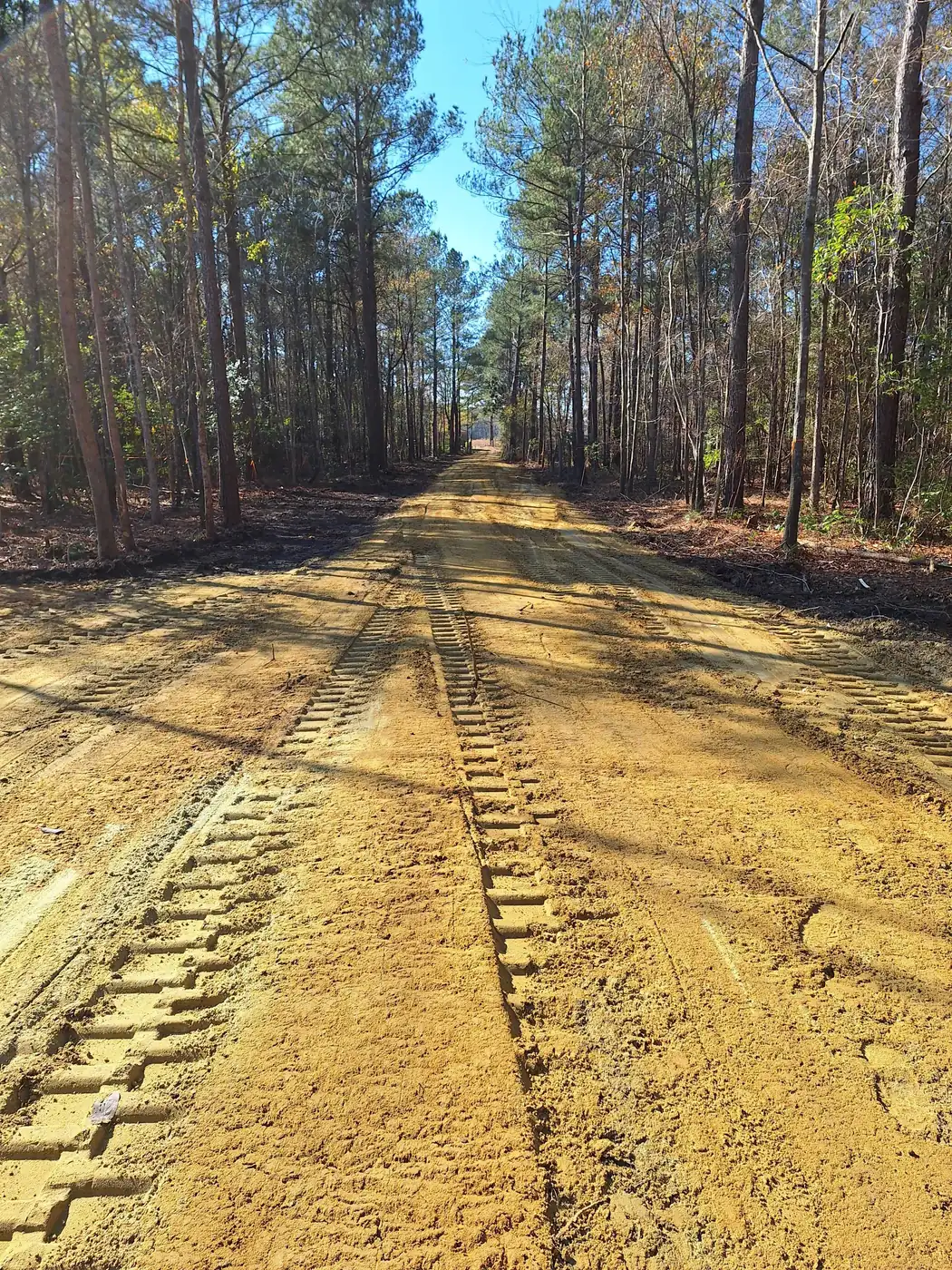
A home driveway follows the same logic. We strip the topsoil, shape and pack the subgrade, and lay geotextile fabric. Then ABC goes down and gets packed in layers, with more base where the ground is soft.
When the whole lot holds water, the fix starts below the driveway. Our grading and dirt work sets the slope so rain runs off the lot instead of sitting on it.
How We Haul and Spread Driveway Stone
We have been based in Burgaw since 2013. We haul ABC stone and gravel in by the load in our dump truck. Our excavators and tracked skid steer spread it, shape the crown and pack it down.
We work across Pender, New Hanover, Onslow, Brunswick and Duplin counties. The estimate is free and comes from looking at the property, and scheduling is usually within days. Call (910) 512-9578 and tell us how long the drive runs and what it needs to carry.